Applies to Lawn & Ornamental / Turf Applications
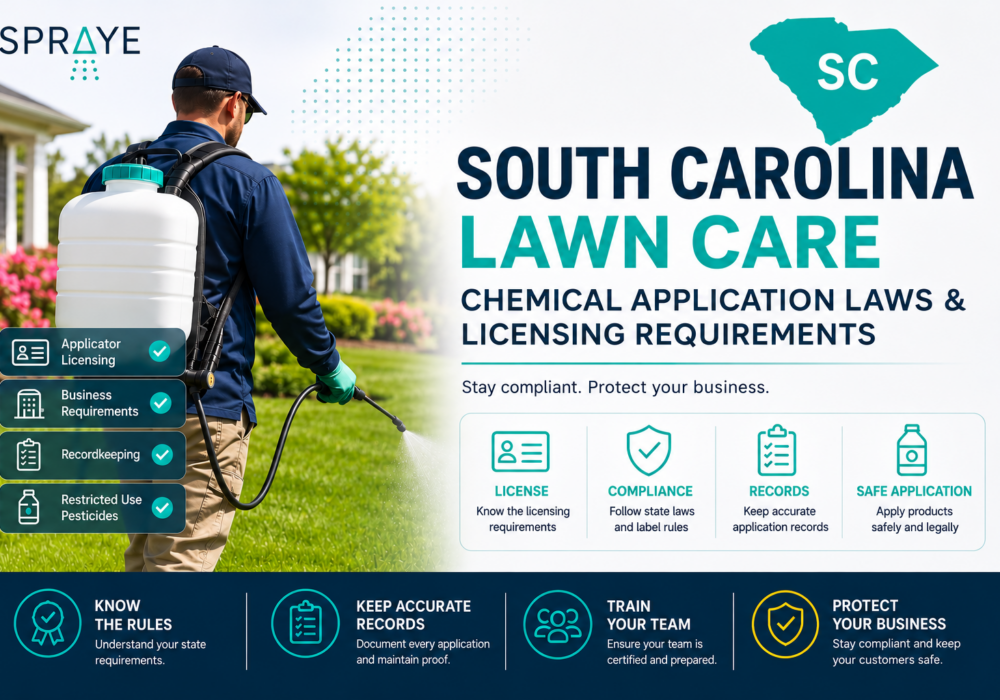
These requirements apply to lawn care companies performing pesticide applications to turf and ornamental landscapes in South Carolina, including:
- Weed control (herbicides)
- Insect control (insecticides)
- Disease control (fungicides)
- Any product with an EPA Registration Number, including Restricted Use Pesticides (RUPs)
Even if your business does not perform structural pest control, applying these products to lawns places you under South Carolina pesticide regulations.
Regulating Agency
Clemson University Department of Pesticide Regulation (DPR)
In South Carolina, pesticide regulation is handled by Clemson University’s Department of Pesticide Regulation, which oversees applicator licensing, certification, and enforcement for lawn & ornamental applications.
👉 Official site: https://www.clemson.edu/public/regulatory/pesticide-regulation/licensing/
👉 Licensing page: https://www.clemson.edu/public/regulatory/pesticide-regulation/exam-information/certification-categories.html
Who Needs a License?
Individual Applicators
You must be licensed if you:
- Apply any pesticide—general or restricted use—to lawns or landscapes owned by others for hire, or
- Apply Restricted Use Pesticides (RUPs)
Licensing is mandatory in the Ornamental and Turf category. Unlike some states, South Carolina requires a license for general use products applied for hire in this category—not just RUPs.
Businesses
South Carolina’s separate DPR business license applies to structural pest control companies (Category 7A). For lawn care companies, your business must:
- Have its applicators licensed as commercial applicators in Category 3
- Submit proof of financial responsibility (liability insurance) for its licensed applicators
- Report employment changes to DPR within two weeks
Lawn Care Licensing Categories
South Carolina regulates lawn care under categories such as:
- Category 3 – Ornamental and Turf Pest Control
This category specifically applies to lawn and landscape pesticide applications (turf, ornamental trees, shrubs, and flowers), not structural pest control.
Requirements Checklist
✅ Individual Applicator Requirements
- ☐ Commercial applicator license required
- ☐ Must pass the core + Category 3 exams (passing results are valid for 5 years)
- ☐ Licensed in Category 3 (Ornamental and Turf)
- ☐ Annual license renewal before December 31
- ☐ 10 continuing certification units (CCUs) per 5-year block, including at least 3 Category 3 CCUs
✅ Business Requirements
- ☐ Ensure every employee applying pesticides for hire in Category 3 is licensed
- ☐ Maintain continuous liability insurance covering pesticide use and transport
- ☐ Report employment changes to DPR within two weeks
✅ Operational Requirements
- ☐ Maintain pesticide application records
- ☐ Keep records for 2 years from the application date
- ☐ Follow all pesticide label instructions
- ☐ Ensure proper storage and handling
- ☐ Display DPR decals on vehicles transporting pesticides on public roads
✅ Restricted Use Pesticides (RUPs)
- ☐ Must be applied by or under supervision of a certified applicator
- ☐ Applicator must be properly licensed
State-Specific Notes for Lawn Care Companies
- South Carolina separates commercial, non-commercial, and private applicators, with lawn care falling under commercial
- Category 3 insurance minimums are $50,000 per claim with an annual aggregate of at least $100,000, with deductibles no higher than $1,000
- Licenses are suspended, then revoked, if continuous insurance coverage isn’t shown
- Working on an expired license (after December 31) is a violation of the Pesticide Control Act
- Records must include the product brand name and EPA Registration Number, active ingredient, quantity used, pest or purpose, and date and place of application
- Recordkeeping is enforced and subject to inspection
Official Resources
Staying Organized Across Licensing & Chemical Applications
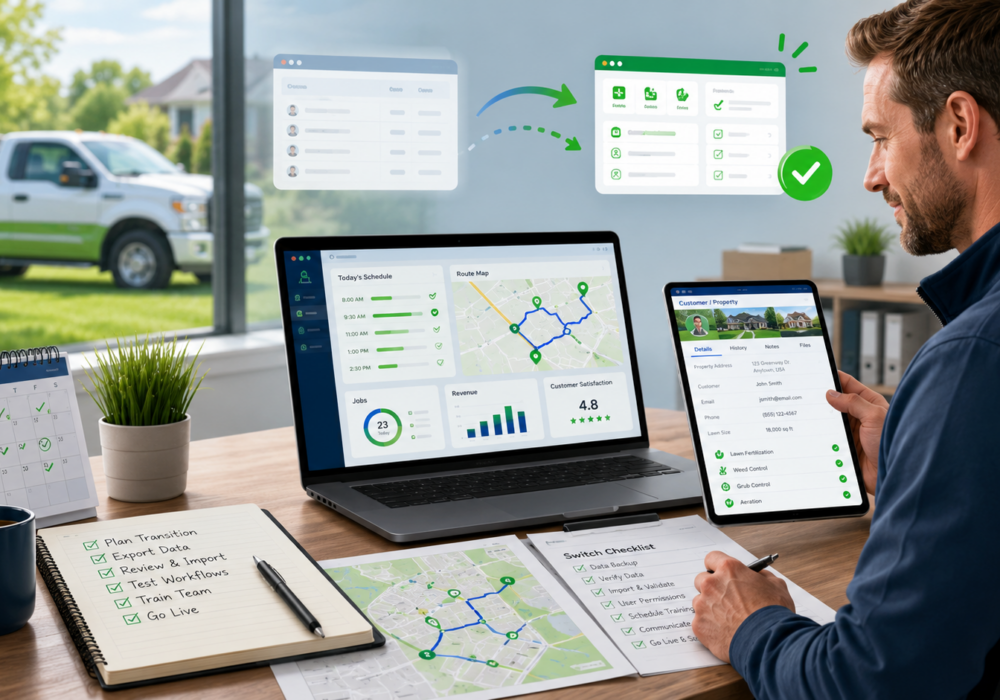
As lawn care businesses grow, keeping track of applicator licenses, pesticide records, and chemical application details across crews and properties becomes increasingly difficult.
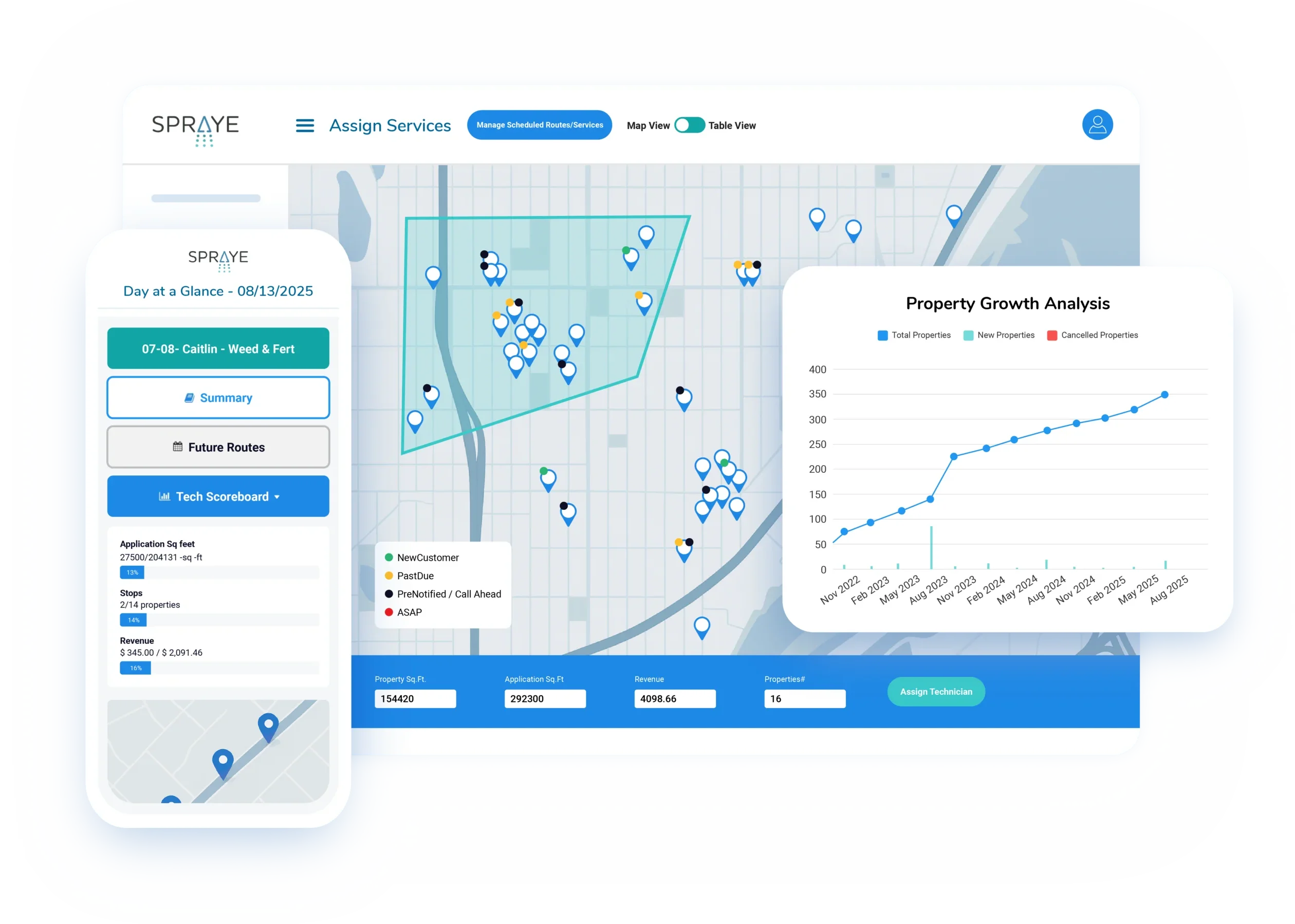
SPRAYE helps lawn care operators centralize:
- Applicator and technician information
- Chemical application records
- Service documentation
- Customer treatment history
- Route and operational workflows
—all in one system designed specifically for lawn care companies.
👉 See how Spraye supports lawn care operations